Jackson Elite Roofing installs metal roofing in Jackson, NJ, serving surrounding cities including Vista Center, Cedar Glen West, Leisure Knoll, Leisure Village West and Plumsted. After more than 20 years in roofing, we know that metal roofs rarely fail in the open panel; they fail at the trim, the transitions and the penetrations, so that is where we spend most of our attention.
Metal makes sense on more Jackson properties than people expect, from low porch roofs where shingles struggle to whole houses and the barns, garages and sheds on larger lots. We help you decide where metal genuinely fits, and where a good architectural shingle would serve you just as well for less money.
Every metal roof we quote comes with a written scope listing tear-off, decking, underlayment, panels, trim and flashing separately. That way you can see exactly what goes into the price and compare it against a shingle quote line by line.
Standing Seam Metal Roofs for Houses
How Standing Seam Panels Work
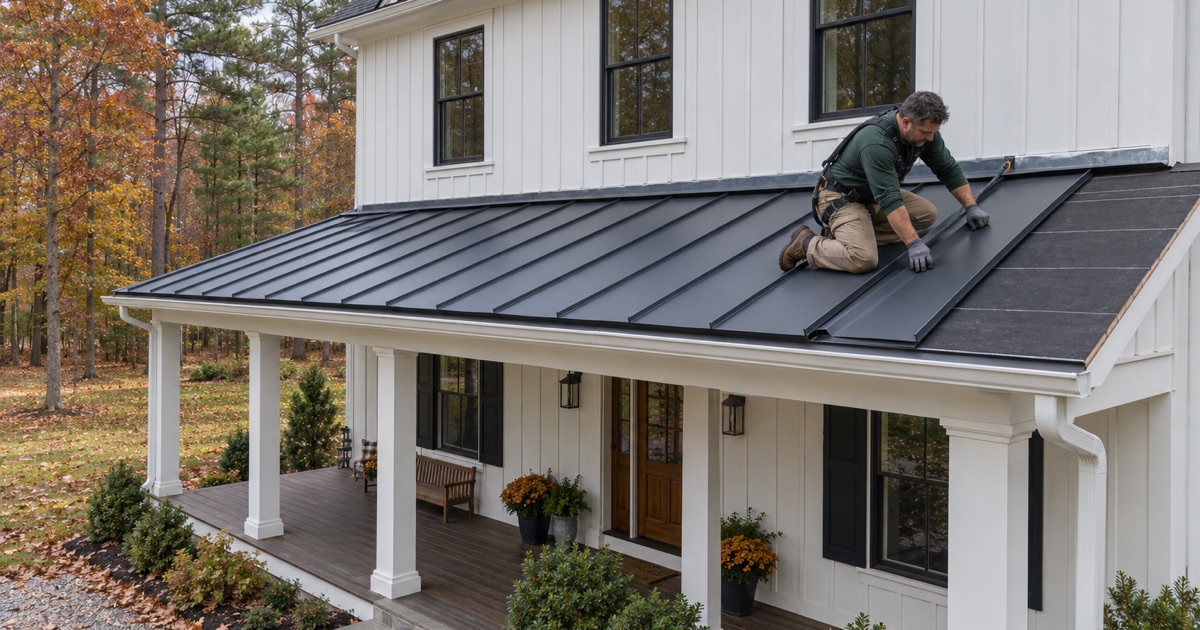
Standing seam panels run from ridge to eave with raised seams that lock the panels together and hide the fasteners underneath. Because no screws pierce the weather surface, there are no rubber washers to dry out and leak, which is the most common failure on cheaper exposed-fastener metal. The panels are held by clips that let the metal expand and contract with temperature, so it does not buckle in summer or pull its fasteners in winter.
Panel Profiles, Gauges and Finishes
Standing seam comes in different seam heights, panel widths and metal gauges, and in steel or aluminum with factory paint finishes. Wider panels can show slight waviness, called oil canning, on long flat runs, so we discuss panel width and stiffening ribs where that matters to you. We bring color samples to compare against your siding and trim, since a metal roof’s finish is part of how the house looks for decades.
Underlayment Beneath Metal
A metal roof still needs a sound deck and good underlayment. We install self-adhering ice and water barrier at the eaves, valleys and penetrations and a high-temperature synthetic underlayment elsewhere, because metal can get much hotter than shingles on a sunny day. That layer also keeps condensation that forms on the underside of the panels from reaching the deck.
Metal Porch Roofs and Low Sections
Why Metal Suits Low-Slope Porches
Many porch roofs are pitched too low for shingles to shed water reliably, so they leak at every heavy rain or ice event. Standing seam panels with sealed seams handle those low pitches far better and give the porch a clean, finished look. We check the minimum pitch for the panel system chosen, so the porch roof is within what the manufacturer allows.
Tying Metal Into a Shingled Roof
Where a metal porch roof meets the wall of the house or runs under a shingled main roof, the transition is the critical detail. We install flashing that laps correctly in the direction water flows, with the shingled roof above shedding onto the metal below. A poorly built transition is the usual reason a new metal porch roof leaks in its first winter.
Metal Over Bay Windows and Dormers
Small roofs over bay windows, entry overhangs and shed dormers are good candidates for metal as well. They are often low-pitched, sit right where people look and take runoff from the larger roof above. A standing seam or flat-lock metal cap on these sections looks sharp against shingles or siding, and when it is flashed properly into the wall, it outlasts the patched shingles these small roofs usually end up with.
Barn, Garage and Outbuilding Roofs
Corrugated and Exposed-Fastener Panels
Barns, detached garages and sheds on larger lots often carry corrugated or ribbed metal panels screwed through the face. These are economical over long spans, but the washers under each screw age and the panels can loosen as the framing moves. We re-fasten or replace panels with screws sized to the framing, reseal laps and replace rusted panels, rather than coating over damage that will keep spreading.
Cupolas, Ridge Caps and Long Spans
Cupolas and ridge caps on outbuildings often leak before the panels do, because their flashing is small and exposed to every wind. Long spans also need the right panel length and lap so water cannot run back under the joint. We rebuild cupola flashing, install closures under ridge caps to keep out wind-driven rain and birds, and check the purlins before trusting new panels to them.
Is Metal Right for Your Roof?
Metal Compared With Architectural Shingles
Metal costs more up front than architectural shingles, but it generally lasts longer, sheds snow and pine needles more easily and carries high wind ratings. Shingles are less expensive, easier to repair and suit most houses perfectly well. We lay out both options on paper so you can compare cost, appearance and expected service life, and we will tell you plainly when shingles are the better value for your house.
Trees, Snow and Metal Roofs
On lots with tall pines, metal sheds needles and does not grow moss the way shaded shingles can, though falling limbs can still dent it. Snow slides off metal readily, so we plan snow guards above entrances, walkways and lower roofs where a sliding sheet of snow could cause damage. Gutters below a metal roof also need solid hangers, because snow and ice leave the panels in larger loads.
Repairing an Existing Metal Roof
Not every tired metal roof needs replacing. Leaking exposed-fastener roofs can often be fixed by replacing the screws and washers, resealing laps and replacing a few rusted panels, and loose trim on standing seam roofs can usually be refastened. We inspect the panels, fasteners and flashing first and tell you whether repairs or a coating will give the roof real additional life, or whether the metal itself is too far gone.
Permits and Communities
On a detached one- or two-family house, re-covering the roof is ordinary maintenance under N.J.A.C. 5:23-2.7 and needs no construction permit. In 55+ and townhouse communities, the association may control the roof and its appearance, so we check the governing documents before quoting a metal roof that the board would have to approve.
- 20+ Years in Business
- Free Written Estimates
- Attic Checked on Every Leak Call