Jackson Elite Roofing handles flat roof repair in Jackson, NJ, serving surrounding cities including Vista Center, Cedar Glen West, Leisure Knoll, Leisure Village West and Plumsted. Most of the flat and low-slope roofs we fix are on houses rather than warehouses: porch roofs, rear additions, attached garages, sunrooms and the low-pitched roofs on manufactured homes.
These roofs leak differently from shingles. Water does not run off quickly, so a small split in a seam or a cracked edge can let water soak into the insulation and deck for weeks before a ceiling stain appears. After more than 20 years in roofing, we know where to look first and how to match the repair to the membrane already on the roof.
We start in the attic or ceiling space below the flat section when it is accessible, then on the roof itself. That tells us how far the water has traveled and whether the repair is a patch or a larger section of wet material that needs to be replaced.
Flat Roof Materials We Repair
EPDM Rubber Roofs
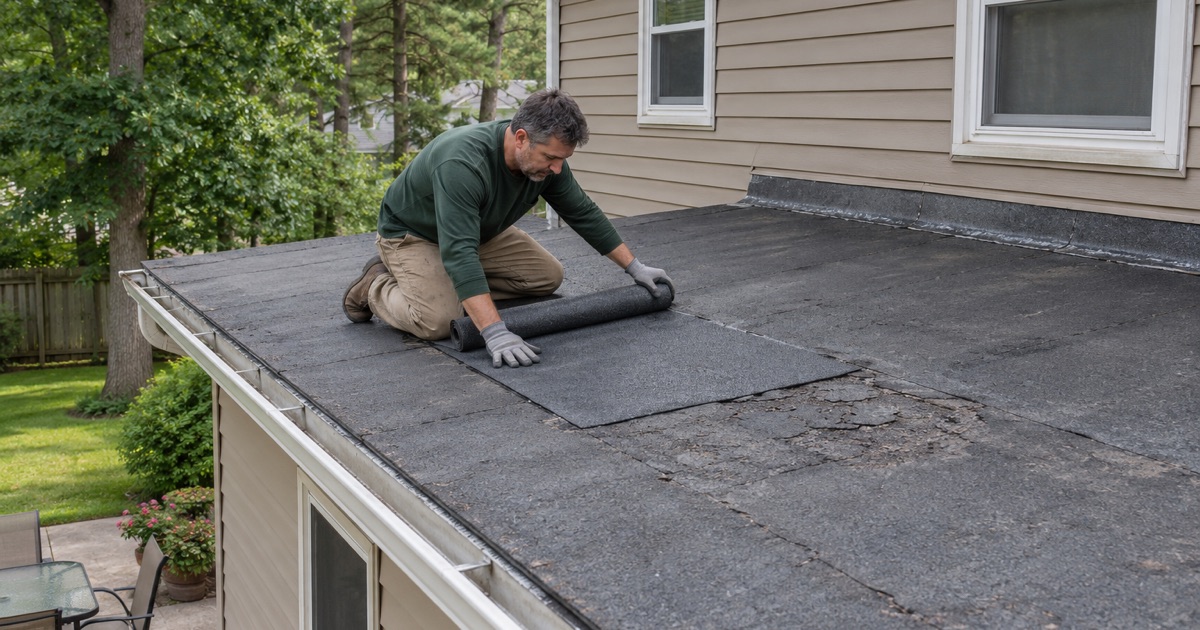
EPDM is a black synthetic rubber membrane common on porches and additions. It usually fails at seams, around edges and at penetrations rather than in the open sheet, and older roofs can shrink and pull away from walls. We clean and prime the area properly and use compatible EPDM patches, tapes and flashing, because a generic roof patch will not bond to rubber for long.
TPO and PVC Membranes
TPO and PVC are white or light gray single-ply membranes with heat-welded seams. Leaks typically start at a seam that was never fully welded or at a corner or penetration where the flashing was cut short. We repair these with matching membrane welded with hot air, which is the only reliable way to join them.
Torch-Down Modified Bitumen
Modified bitumen, often installed with a torch, is a thick asphalt-based membrane reinforced with polyester or fiberglass. It wears at laps, cracks along edges and develops blisters where moisture or air was trapped during installation. We cut out and repair blisters, reseal laps and add new plies over worn areas using compatible materials and careful torch work.
Built-Up and Roll Roofing
Older flat roofs may be built-up tar and gravel or simple mineral-surfaced roll roofing. These can often be patched for a few more years, but they are near the end of their useful life on many older houses. We tell you plainly when a repair is worth doing and when the roof has reached the point where patching only delays a replacement.
Common Flat Roof Problems
Split Seams and Open Laps
Seams and laps are the weak points of any membrane, especially where the roof expands and contracts in summer sun and winter cold. A seam that has opened slightly can let in a surprising amount of water during a heavy rain. We repair the seam with the correct method for the membrane rather than smearing tar over it, which traps water underneath.
Blisters and Soft Spots
Blisters form when moisture or air trapped under the membrane expands in the heat. Some are harmless for years, but a blister that cracks opens a hole in the roof. Soft spots underfoot usually mean the insulation or deck beneath has been wet for some time. We test those areas, cut out wet material and replace it before patching the membrane.
Ponding Water and Clogged Drains
Water that stands for days on a flat roof speeds up wear and puts constant pressure on any weak seam. Ponding usually comes from a sagging deck, compressed insulation, a clogged drain or scupper or a roof that was never sloped properly. We clear drains, repair the low spots where possible and, on larger repairs, add tapered insulation to move water toward the edge or outlet.
Edges, Walls and Transitions
Flat roofs on houses usually meet a wall or a shingled roof somewhere, and those transitions leak more than any other part. Membrane must be carried up the wall and covered with counter flashing, and where a flat porch roof runs under the shingles above, the flashing has to lap in the right direction. We rebuild these details with proper flashing and edge metal rather than sealant alone.
Flat Roofs on Jackson Homes
Porch Roofs, Additions and Garages
Plenty of houses around Jackson, of every age, have flat or nearly flat roofs over porches, family room additions and attached garages. These sections often age faster than the main roof, because they were built with a lower-grade membrane or have taken more ponding. We can repair them independently or plan them with a main roof replacement so the whole house is on the same schedule.
Manufactured Home Roofs
Jackson has a sizable number of manufactured homes, and their low-slope metal or membrane roofs leak at seams, vents and fasteners. Depending on the roof’s condition, we reseal and coat it or recommend a roof-over system that adds pitch and insulation. We check what the community or park requires before starting.
Coatings, Repair or Replacement
A coating can extend the life of a flat roof that is still sound and dry underneath, and spot repairs can buy years on a roof with one or two problem areas. When the membrane is failing across the roof, the insulation is wet in several places or repairs keep failing next to each other, replacement is the better value. We give you a straight answer and an itemized scope either way, so you can decide with a clear picture.
- 20+ Years in Business
- Free Written Estimates
- Attic Checked on Every Leak Call